Plumbing and heating company in Bristol, listed as a TrustMark registered business (licence 3280318), offering bathroom fitting.
Registered company, not yet verified
No reviews yetBristol ·

A bathroom plumber fits and connects the bath, shower, basin, toilet and towel rail, and tests every joint before the room is sealed up. Here is what the job involves, which rules apply and what to ask before you agree a quote.
The plumbers below list bathroom fitting as a core service. Each profile says whether we have checked the firm’s Gas Safe number yet, and shows any fees that plumber publishes, so you can compare before you call.
Tell us what you need and where. We reply by email within 1 working day. Free, and nothing is shared without asking you.
Ask for the call-out or visit fee before anyone comes out, and a written quote before work starts. Each profile lists the fees that plumber publishes.
Plumbing and heating company in Bristol, listed as a TrustMark registered business (licence 3280318), offering bathroom fitting.
Plumbing and heating company in London, listed as a TrustMark registered business (licence 3494214), offering bathroom fitting.

Plumbing and heating company in London, listed in the CIPHE member directory, offering radiators and heating, bathroom fitting and emergency plumber.
Plumbing and heating company in London, listed in the CIPHE member directory, offering radiators and heating, boiler repair and bathroom fitting.
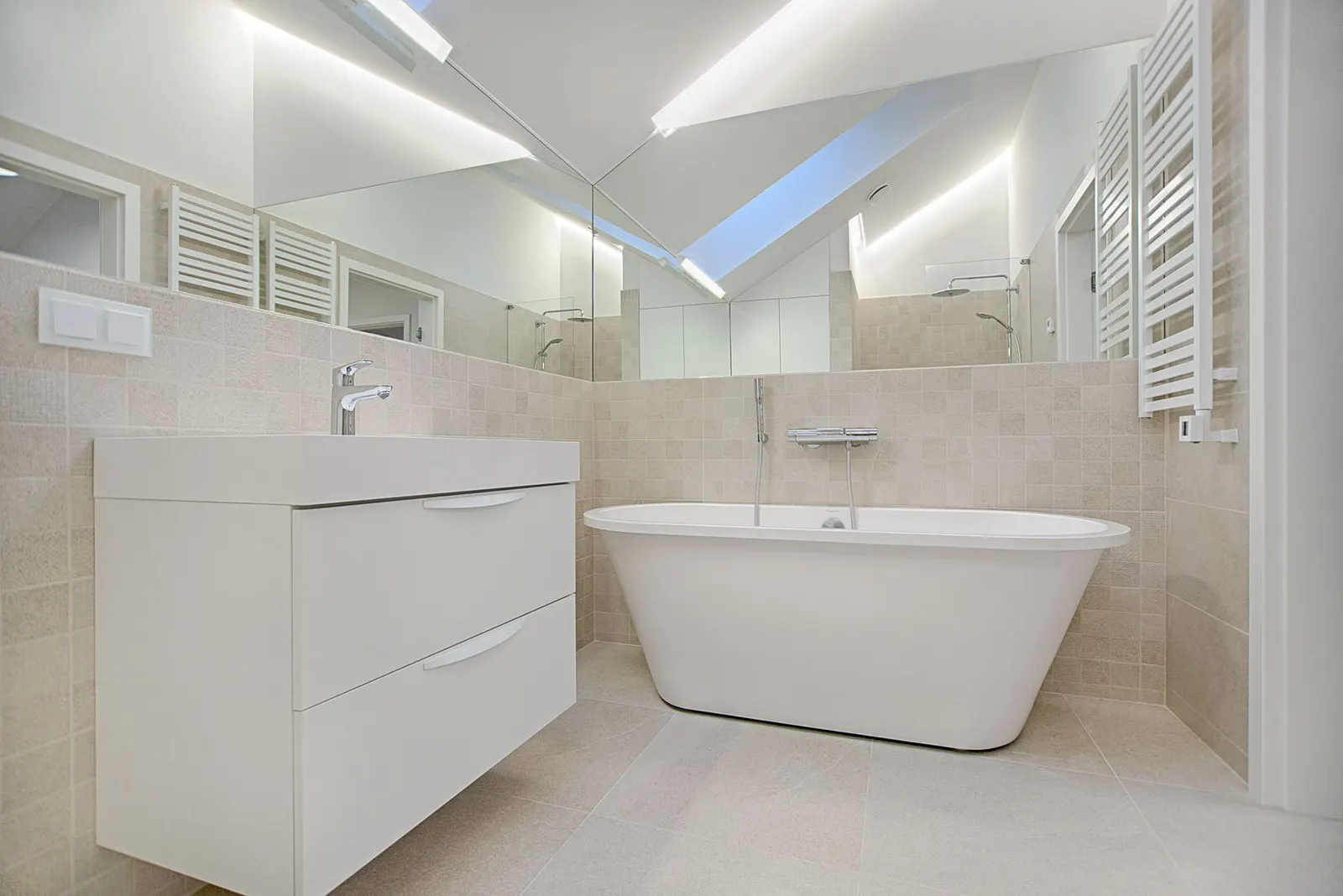
| Figure | Value | Source |
|---|---|---|
| Highest hot water temperature at a fixed bath in a new dwelling | 48°C | Approved Document G (2024 amendments), GOV.UK, 2015 edition incorporating 2016 and 2024 amendments |
| Bathroom space where changes to existing circuits are notifiable | Within 0.6 m of the bath or shower tray edge, up to 2.25 m high | Approved Document P, GOV.UK, 2013 edition, current edition on GOV.UK in October 2026 |
| Minimum intermittent extract rate for a bathroom | 15 litres per second | Approved Document F, Volume 1 (2026 edition, in force from 24 March 2027), GOV.UK, 2026 edition; takes effect 24 March 2027 |
| Water use cap for a new home | 125 litres per person per day | Approved Document G (2024 amendments), GOV.UK, 2015 edition incorporating 2016 and 2024 amendments |
| Yearly saving from a water-efficient shower head | Around £25 a year in Great Britain and about 9,000 litres of water | Energy Saving Trust, Page last updated 6 October 2026 |
| Yearly saving from keeping showers to four minutes | Around £45 a year in Great Britain and 17,000 litres of water | Energy Saving Trust, Page last updated 6 October 2026 |
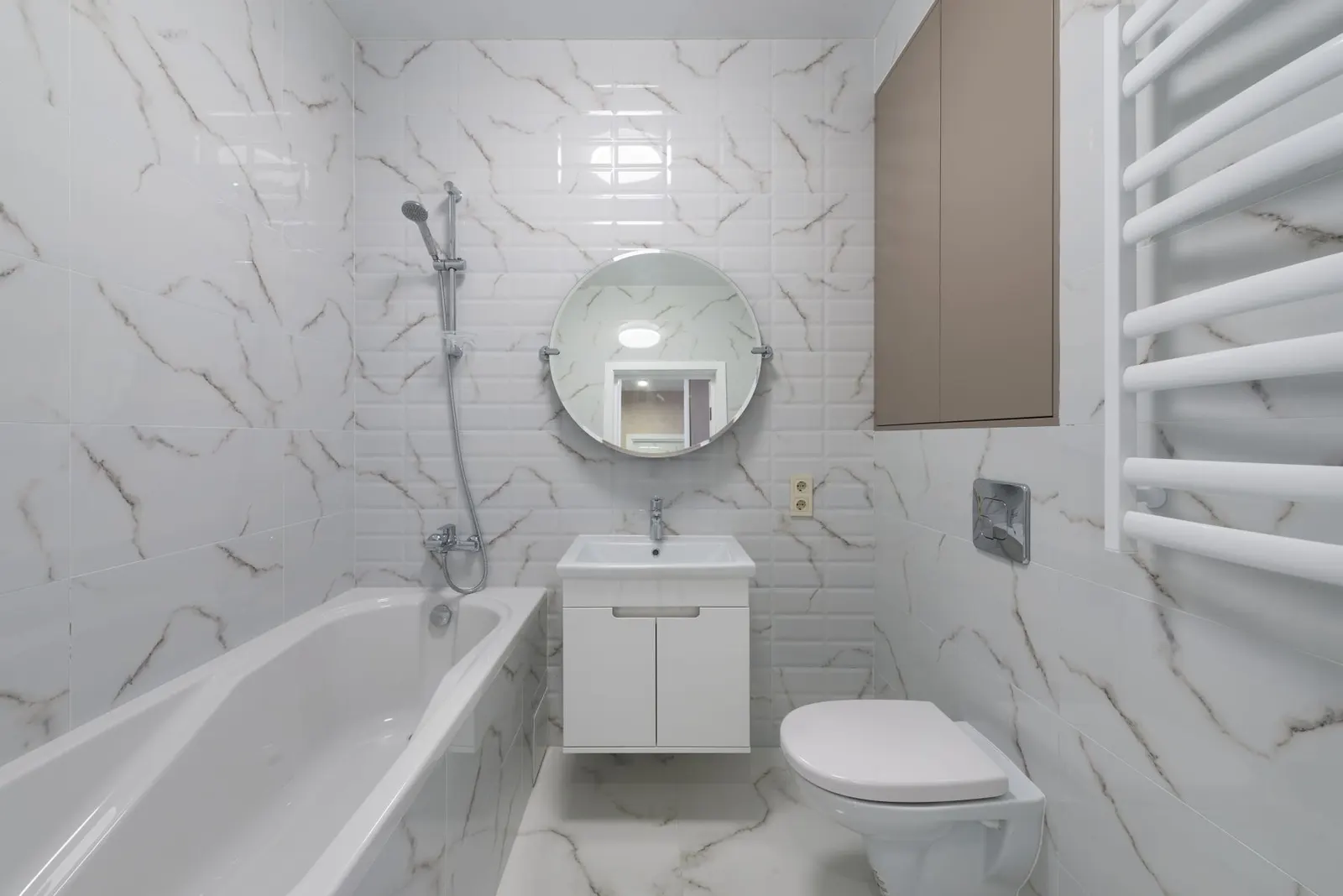
A bathroom plumber moves, connects and tests the water and waste for every fitting in the room: bath, shower, basin, toilet and towel radiator. On a full bathroom installation the plumber usually visits twice, once to put the pipework in before the walls are closed and once to connect the finished fittings. Hiring someone to fit a bathroom is often a bigger decision than the supplier of the suite, because most faults trace back to concealed pipework, and it is expensive to reopen a tiled wall.
This page is for anyone searching for a bathroom fitter near them, or a plumber who can join a bathroom project that someone else is leading. It covers the scope of the work, the order things happen in, the rules that apply and what makes quotes differ.
The plumber's part of a bathroom fit covers the hot and cold supplies, the waste pipes and the connections to each fitting. The usual tasks are:
A plumber does not normally tile, plaster, lay flooring or wire the room. Some firms bring those trades with them and manage the whole refit. If you would rather have one contractor in charge of the entire room, a general building firm may suit you better, and MyLocalBuilders lists builders who take on whole-room refurbishments.
The sequence matters. Doing it out of order is how a tidy job turns into a messy one.
Allow for gaps between stages. Grout and sealant need time to cure, and a tiler's schedule rarely fits neatly between two plumbing visits. Ask each trade for a start date and an end date, and expect any one of them to move.
Plumbing, electrics and ventilation each have a rule that touches a bathroom. The detail below applies in England, and the other UK nations have their own versions, so check locally.
Hot water safety. Approved Document G requires the hot water to a fixed bath in a new home, or one created by a change of use, to be limited to 48°C. It is not a legal requirement for a refit in an existing home, but a blending valve is sensible good practice, so ask your plumber about it.
Electrics. Approved Document P makes the installation of a new circuit notifiable, along with the replacement of a consumer unit and any addition or alteration to existing circuits in a bathroom's special location. That location is the space within 0.6 metres of the edge of a bath or shower tray, up to a height of 2.25 metres. Your plumber does not need to do this work, but a heated towel rail, a shaver socket or an electric shower may involve it. The electrician should be registered with a competent person scheme or the work needs a building notice, as explained in our guide to building regulations for plumbing and heating.
Ventilation. Approved Document F (2026 edition, which takes effect on 24 March 2027) gives an intermittent extract rate of 15 litres per second for a bathroom. The same document says that when you refurbish a bathroom, existing fans should be kept or replaced, and that extra ventilation may be needed if the work makes the room less compliant than before. A new fan is cheap compared with damp.
Water efficiency. The 125 litres per person per day cap in Approved Document G applies to new homes rather than refits. It is still a useful yardstick for choosing a shower and taps. The Energy Saving Trust says a water-efficient shower head saves around £25 a year in Great Britain and about 9,000 litres of water, and that keeping showers to four minutes could save around £45 a year and 17,000 litres.
Gas. If the bathroom project involves moving a gas boiler or any gas pipe, that part must be done by a Gas Safe registered engineer. See our guide on how to check a plumber is Gas Safe or WaterSafe registered.
We do not quote prices on this page, because a figure that fits a small cloakroom would mislead on a large family bathroom. These are the factors that move a quote:
Ask for the quote itemised, with the supply of materials stated, and a clear line for anything that could be added after strip-out.
Look for someone who has done work like yours, who turns up to survey it, and who puts what they will do in writing. A fitter who gives a price over the phone without seeing the room is guessing.
Check the registration that fits the job. Gas work needs Gas Safe. WaterSafe is the register for plumbers approved to work on water fittings, and electrical work in the special location needs an electrician registered with a competent person scheme, a registered third-party certifier or a building notice. Ask for insurance details as well, and request references from recent bathrooms rather than kitchens or boiler jobs.
Our directory lists registered businesses and ranks them by verified customer reviews first and distance second, with no paid placement in the ranked list. You can browse plumbers by city to see who covers your area.
Run each fitting and look under the bath, basin and toilet with a torch for a week or so. Keep the paperwork, including any electrical certificate, because a buyer's solicitor may ask for it. If anything leaks, switch the water off at the isolation valve and call the firm straight away; for a burst or an uncontrolled flow, see leaks and burst pipes.
Tell us what you need and where. We reply by email within 1 working day. Free, and nothing is shared without asking you.
Not always. A plumber handles water, waste and the connections to each fitting. A bathroom fitter may also tile, board and decorate, either personally or through other trades. Ask who will do which task, and whether the quote covers the whole room or only the plumbing.
Only if the job touches gas, such as moving a boiler or a gas pipe. Water-only work, such as fitting a bath, basin or toilet, does not need Gas Safe registration. If the new layout means moving the boiler, hire someone who is registered.
Often, but not always. The waste pipe needs enough fall to drain, the floor must be able to take the new pipework, and the soil stack position limits how far you can go. A plumber should check this at the survey, before you buy a suite.
A qualified electrician, not the plumber, unless the firm employs both. Part P of the Building Regulations covers new circuits and changes close to the bath or shower, so ask to see their registration and get a certificate when the work is done.
It is a sensible time to. Approved Document F (2026 edition, in force from 24 March 2027) gives 15 litres per second as the intermittent extract rate for a bathroom, and it advises replacing or keeping existing fans during a refit. Ducting and cabling are easier to run before the ceiling is closed.