Plumbing and heating company in London, listed as an APHC Licensed Member, offering emergency plumber and leaks and burst pipes.
Registered company, not yet verified
No reviews yetLondon ·

Most plumbing emergencies are made much smaller by the first ten minutes: isolate the water, stay safe, then call the right person. This page covers who that is and how to vet them quickly.
The plumbers below list emergency plumber as a core service. Each profile says whether we have checked the firm’s Gas Safe number yet, and shows any fees that plumber publishes, so you can compare before you call.
Tell us what you need and where. We reply by email within 1 working day. Free, and nothing is shared without asking you.
Ask for the call-out or visit fee before anyone comes out, and a written quote before work starts. Each profile lists the fees that plumber publishes.
Plumbing and heating company in London, listed as an APHC Licensed Member, offering emergency plumber and leaks and burst pipes.

Plumbing and heating company in London, listed in the CIPHE member directory, offering radiators and heating, boiler repair, leaks and burst pipes and emergency plumber.
Plumbing and heating company in London, listed in the CIPHE member directory, offering leaks and burst pipes, emergency plumber and radiators and heating.

Plumbing and heating company in London, listed in the CIPHE member directory, offering radiators and heating, bathroom fitting and emergency plumber.

| Figure | Value | Source |
|---|---|---|
| National Gas Emergency Service (free, for natural gas leaks) | 0800 111 999, open 24 hours | HSE: Carbon monoxide awareness, frequently asked questions, HSE page as read on 12 October 2026 |
| HSE Gas Safety Advice Line | 0800 300 363 | HSE: Carbon monoxide awareness, frequently asked questions, HSE page as read on 12 October 2026 |
| People who die each year from carbon monoxide from gas appliances and flues that were not properly installed, maintained or ventilated | Around 7 | HSE: Carbon monoxide awareness, frequently asked questions, Annual figure as stated by HSE, page read 12 October 2026 |
| People who say they have been scammed by rogue plumbers | Over a quarter (WaterSafe research) | WaterSafe Register, WaterSafe site, read 12 October 2026 |
| Recognised plumbers an approved business needs for water supply work | At least 1 for every 5 employees doing that work | WaterSafe Register, WaterSafe site, read 12 October 2026 |
| Minimum plumbing qualification WaterSafe says a qualified plumber should hold | NVQ Level 2 in Mechanical Engineering Services (Plumbing), or equivalent | WaterSafe Register, WaterSafe site, read 12 October 2026 |
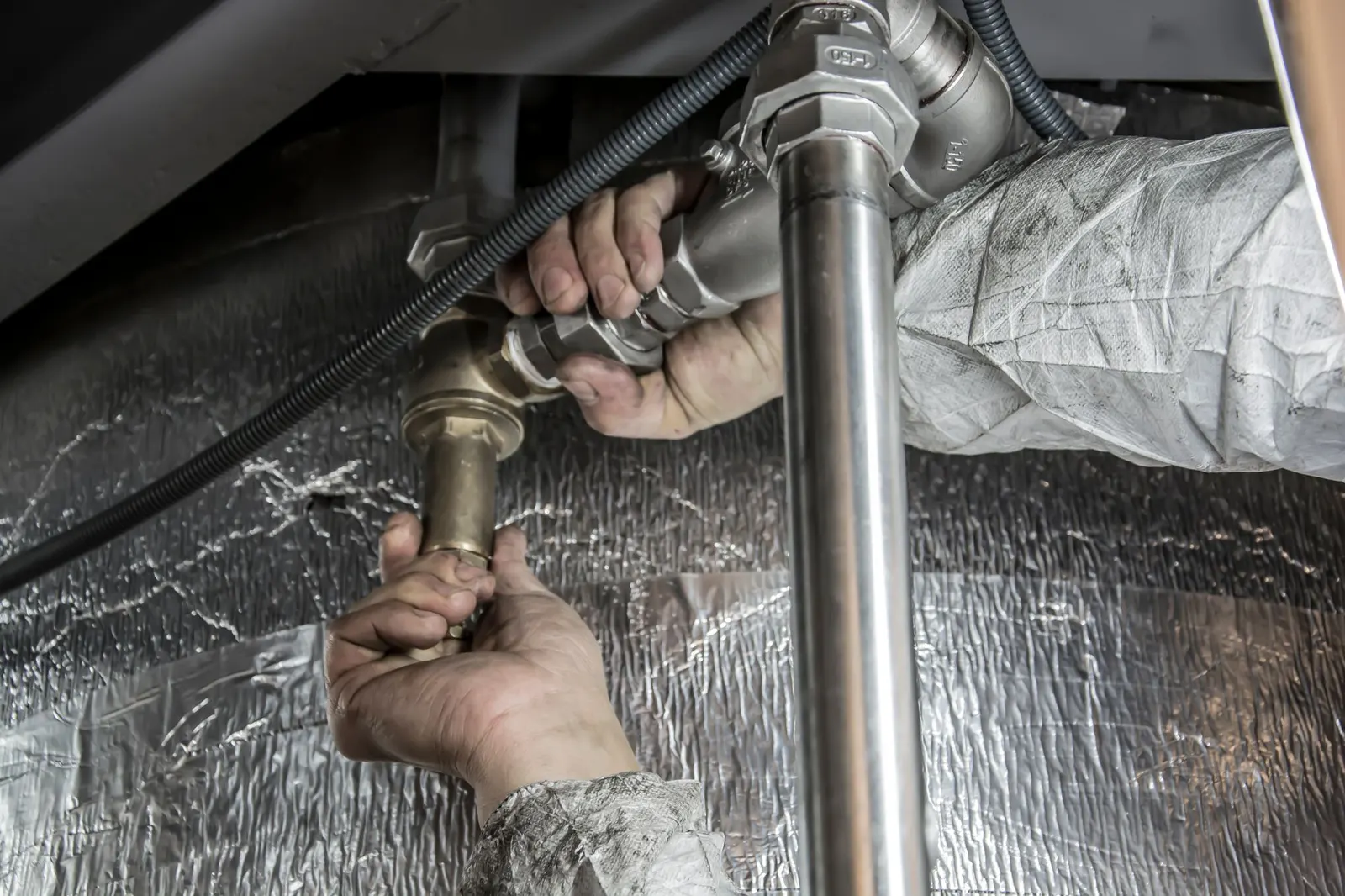
An emergency plumber is the right call when water or heat is failing in a way that is damaging your home, putting someone at risk or cannot wait until the next working day. If you smell gas or suspect carbon monoxide, do not start by searching for an emergency plumber near you: leave the property and ring the free National Gas Emergency Service on 0800 111 999. For everything else, the order is simple. Stop the water, make the room safe, then find someone who is registered for the work and ready to tell you the terms before they start.
What you do before the plumber turns up often decides how much damage there is to clean up afterwards. Work through these in order.
A slow weep is a different matter from a burst. For diagnosing those and deciding who owns the pipe, our guide to leaks and burst pipes goes through the signs.
Call-out premiums are real, so it helps to separate the genuinely urgent from the merely annoying. The table is a guide, not a rule: if you are unsure, ring a registered firm and describe what you see.
| Situation | Treat as an emergency? | First move |
|---|---|---|
| Smell of gas, or a gas alarm sounding | Yes, urgent | Leave, then ring 0800 111 999 from outside |
| Suspected carbon monoxide symptoms | Yes, urgent | Get into fresh air and seek medical help |
| Burst pipe or fast leak you cannot isolate | Yes | Stop tap, then call an emergency plumber |
| Water coming through a ceiling | Yes | Stop tap, electrics check, then call |
| Blocked toilet and it is your only one | Often | Try a plunger, then call if it fails |
| Boiler stopped, vulnerable person at home in winter | Often | Call a Gas Safe registered engineer |
| Dripping tap or running cistern | No | Book a normal appointment |
| Radiator cold at one end | No | Book a normal appointment |
| Slow drain | No | Book a normal appointment |
A boiler breakdown is the common grey area. If the house has gone cold and someone there is elderly, very young or unwell, treat it as urgent. If everyone is healthy and the weather is mild, a next-day visit usually costs less. Our boiler repair guide explains what an engineer will check first.
Plumbers who work on water systems are not necessarily allowed to work on gas. HSE says natural gas escapes should be reported to the National Gas Emergency Service, and LPG users should ring their LPG supplier instead. HSE also says that if in doubt you should evacuate the building and inform the police.
In practice that means: open doors and windows if it is safe, shut the meter control valve if you know where it is and can reach it, do not use switches, naked flames or anything that sparks, and leave. Make the call from outside.
Carbon monoxide has no smell, which is why symptoms matter. HSE lists headaches or dizziness, breathlessness, nausea, loss of consciousness, tiredness, pains in the chest or stomach, erratic behaviour and visual problems. It says that around seven people die each year from carbon monoxide produced by gas appliances and flues that were not properly installed, maintained or ventilated. The NHS says to call 999 or go to A&E if someone exposed to carbon monoxide is finding it hard to breathe, has suddenly become confused or has lost consciousness, and not to drive yourself to A&E.
Once the supplier has made things safe, the fix itself must be done by someone on the Gas Safe Register. Read how to check a plumber is Gas Safe or WaterSafe registered before you let anyone touch a boiler or gas pipe.
Search results for urgent plumbers are crowded with lead-generation sites and call centres that pass your job to whoever pays. Two things help. First, ask who will actually attend: a named person or firm, with a van and a registration number you can check. Second, use a directory that lists named businesses rather than a phone line.
MyLocalPlumbers.uk lists local plumbing businesses by town, and each profile says whether its Gas Safe number has been checked. Results are ordered by verified customer reviews first and then by distance, and nobody can pay to move up the list. Browse by area from all cities, pick a firm that says it covers urgent work, and phone it. We do not promise that any listed firm answers at night or will arrive within a set time; confirm that on the call.
An urgent job is when people skip checks, so keep them short.
Most disputes come from a missing conversation at the start. Ask:
We do not publish prices because none of them are reliable without a visit. These are the factors that usually move a bill:
If you did not agree a price beforehand, the Consumer Rights Act 2015 says you must pay a reasonable price and no more, and that a reasonable price is a question of fact. The same Act says a trader must perform the service with reasonable care and skill. Neither replaces agreeing a figure up front.
For a contract made at your home, the Consumer Contracts Regulations 2013 normally give a cancellation period, and a trader must not begin the service during it unless you have made an express request. If you ask for work to start immediately and then cancel, you may have to pay a proportionate amount for what was done. How this applies to your own job depends on how the contract was made, and Citizens Advice can explain it if there is a dispute.
Ask for a written invoice that describes the cause and the work done. Keep any certificate, as it may be needed when you sell. If your home insurance covers escape of water, contact the insurer before arranging a permanent repair and keep the damaged parts if they ask. Some work, including changes to gas appliances, hot water systems and drainage, falls under building rules; see do you need building regulations approval for plumbing and heating.
Tell us what you need and where. We reply by email within 1 working day. Free, and nothing is shared without asking you.
No, ring the National Gas Emergency Service on 0800 111 999 first, from outside the property. HSE says natural gas escapes go to that service, and LPG users should call their LPG supplier. A Gas Safe registered engineer then carries out any repair once the supply has been made safe.
Only if they hold the right registrations. Water repairs are covered by WaterSafe approval, while boiler and gas work needs Gas Safe registration for that appliance type. Ask on the phone what they are registered for, and have the stop tap closed before they arrive.
WaterSafe advises getting at least three quotes for planned jobs. In an emergency you rarely have time, so ring two firms, ask for the call-out charge, hourly rate and VAT status, and have the leak made safe first. Agree a written price before any larger repair begins.
It depends on how the contract was made. Under the Consumer Contracts Regulations 2013, if you asked for work to start inside the cancellation period and then cancel, you may owe a proportionate amount for what was done. If the trader failed to give required information you may owe nothing, so ask Citizens Advice.